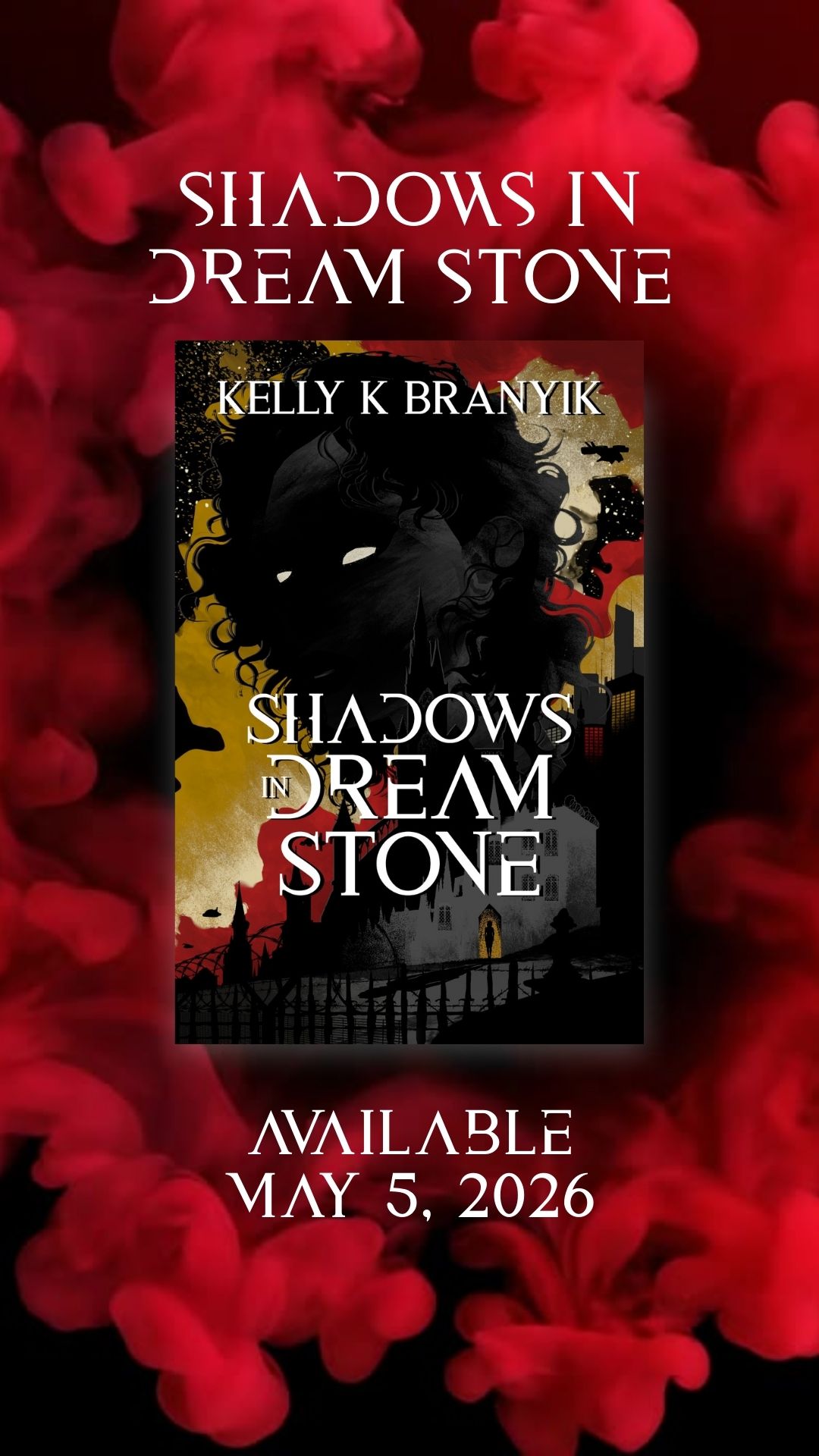

Before I talk about Shadows in Dream Stone, I want to say this clearly: I didn’t write this book to be shocking for the sake of shock. I didn’t write it to provoke outrage, or to punish readers, or to make myself look brave.
I wrote it because I was angry.
Because I was scared.
Because I was heartbroken.
And because I care deeply about the people this world keeps asking to endure more than they should.
I know people will have questions about this book—why it’s dark, why it’s angry, why it doesn’t soften its edges. So rather than answering those questions defensively or in fragments, I want to answer them honestly, thoughtfully, and with as much compassion as I can offer.
This is my journey to writing Shadows in Dream Stone.
When did the first idea for Shadows in Dream Stone appear, and what form did it take?
The first idea came during a car ride with my mom, sometime around the overturning of Roe v. Wade in Texas. We had just gone grocery shopping. We were talking—quietly at first, then more urgently—about how angry and scared we felt.
By the time we reached home, we had imagined a story about a woman who would be considered a villain by the government—but who, in our eyes, was fighting for reproductive justice.
That was the moment Abaddon Ordell was born.
We talked about symbolism, meaning, and what kind of actions someone might be driven to take when pushed far enough. At the time, the story was meant to be a standalone novel. It has since become a series, with multiple books and a prequel centered on another character. I’m already working on Book Two, because the first book is only the beginning—it’s world-building, context, and the emotional groundwork for what comes next.
What fear, question, or urgency pulled you toward this story?
Fear was a huge part of it.
I have people I love who have had miscarriages. People I love who have had abortions because they had to. People I love who nearly died because of miscarriages. Watching women be punished—legally and socially—for things that are either medical realities or deeply personal choices filled me with rage.
What hurt even more was hearing people celebrate these laws without realizing that the same ideology they praised could have taken the lives of women they love.
It made the women in my life feel disposable. Undervalued. Unprotected.
I’ve also spent years listening to women tell their stories about violence, injustice, coercion, and harm inflicted by men and by systems built to control them. I read extensively while preparing to write this book: about abortion, incarceration, oppression, feminism, and history. Not out of fascination, but out of responsibility.
I needed to understand what I was writing about because this isn’t theoretical. It’s real.
Did the story begin with a character, a theme, or a feeling?
It began with a character.
I knew I wanted Abaddon to be a woman. I knew I wanted her to be bisexual. I knew I wanted her to be multiracial. I did not want to write another story where a white, cisgender character saves the world while everyone else exists on the sidelines.
Abaddon Ordell is multiracial because she is not meant to stand in for one kind of woman, but to hold the lived realities of many—across race, identity, and experience—in a world that insists on fragmenting us.
Black women, in particular, have been central to resistance, progress, and survival in this country. They have carried movements forward again and again, often without rest or recognition. While I don’t claim to speak for everyone, I didn’t want to keep reinforcing the same narrow narratives we see over and over.
My time as a Peace Corps volunteer in China deeply shaped this awareness. I went there believing I would change the world. Instead, the world changed me. Only after returning home did I begin to understand the layers of voluntourism and white saviorism I hadn’t fully examined before. Listening to people’s stories—their lives, their discrimination, their resilience—changed how I understand power and responsibility.
Abaddon became a way to hold all of that complexity.
What felt non-negotiable about this world and this story?
From the beginning, one thing was clear: her story had to be hard.
I don’t enjoy writing about misogyny, sexual violence, or oppression. It isn’t cathartic. It isn’t entertaining. But I included those moments because they happen and because they should make us uncomfortable.
This book is meant to unsettle readers, not because suffering is spectacle, but because ignoring it allows it to continue. I struggled constantly with the fear of hurting people, especially readers who share Abaddon’s identities. I didn’t want to retraumatize anyone. But I also didn’t want to lie about our very real reality.
Her pain provides the context for her choices later in the series. It shows what happens when injustice is allowed to persist, even after decades of progress, activism, and feminism.
Why did you need to write this book now?
I’ve been trying to write this book for four years. I finished it now because things are, without a doubt, getting much worse.
Women’s reproductive rights are under attack. Gender-based and BIPOC oppression is growing louder and more aggressive. Male-centered talk shows continue to gain traction by glorifying power, hierarchy, and resentment, which contribute to a cultural climate that normalizes patriarchy while dismissing the harm it causes.
The anger I was carrying around all these topics was becoming toxic to my mental health and I needed to put it somewhere.
I needed to imagine a world where someone finally says enough, even if how she does it is morally complicated. I needed to write this for myself, and for readers who feel the same kind of quiet, burning rage and don’t know where to put it.
I didn’t write this book to be comfortable.
I wrote it to survive.
What personal experiences quietly shaped this story?
Every woman I know has a story. Coercion. Assault. Fear. Objectification. I am not exempt from that reality.
Writing this book meant revisiting experiences—my own and others’—that were painful and uncomfortable. Some scenes felt uncomfortably close to home. While I was writing, someone I love shared something that had happened to them, something I had already unknowingly written into the story.
That realization made me slow down. It made me more careful. It also reinforced why this story needed to exist.
To manage my mental health while creating this, I had support from my therapist, friends, and family while writing this book. Without them, I’m not sure I could have finished it.
How did writing this book change how you understand yourself?
It reminded me that I care deeply, and that I will always have so much to learn.
There is always room to be a better ally. A better listener. A more compassionate human. I almost didn’t write this book because I was afraid of how it would be received—afraid of being misunderstood, labeled angry, or accused of hating men.
But silence doesn’t protect us. And empathy doesn’t require erasure.
This book reinforced that I can hold rage and compassion at the same time.
What questions does Shadows in Dream Stone ask?
At its core, the book asks: When is enough enough?
- What will it take for us to stop hurting each other?
- What will it take for us to care and not abstractly, but actively?
- And for those who have been harmed, what does justice actually look like?
How do we forgive ourselves for the shame we carry?
How do we heal when the world refuses to change?
What do you hope readers feel when they finish Shadows in Dream Stone?
I hope they feel the rage.
And I hope they feel motivated to keep going.