
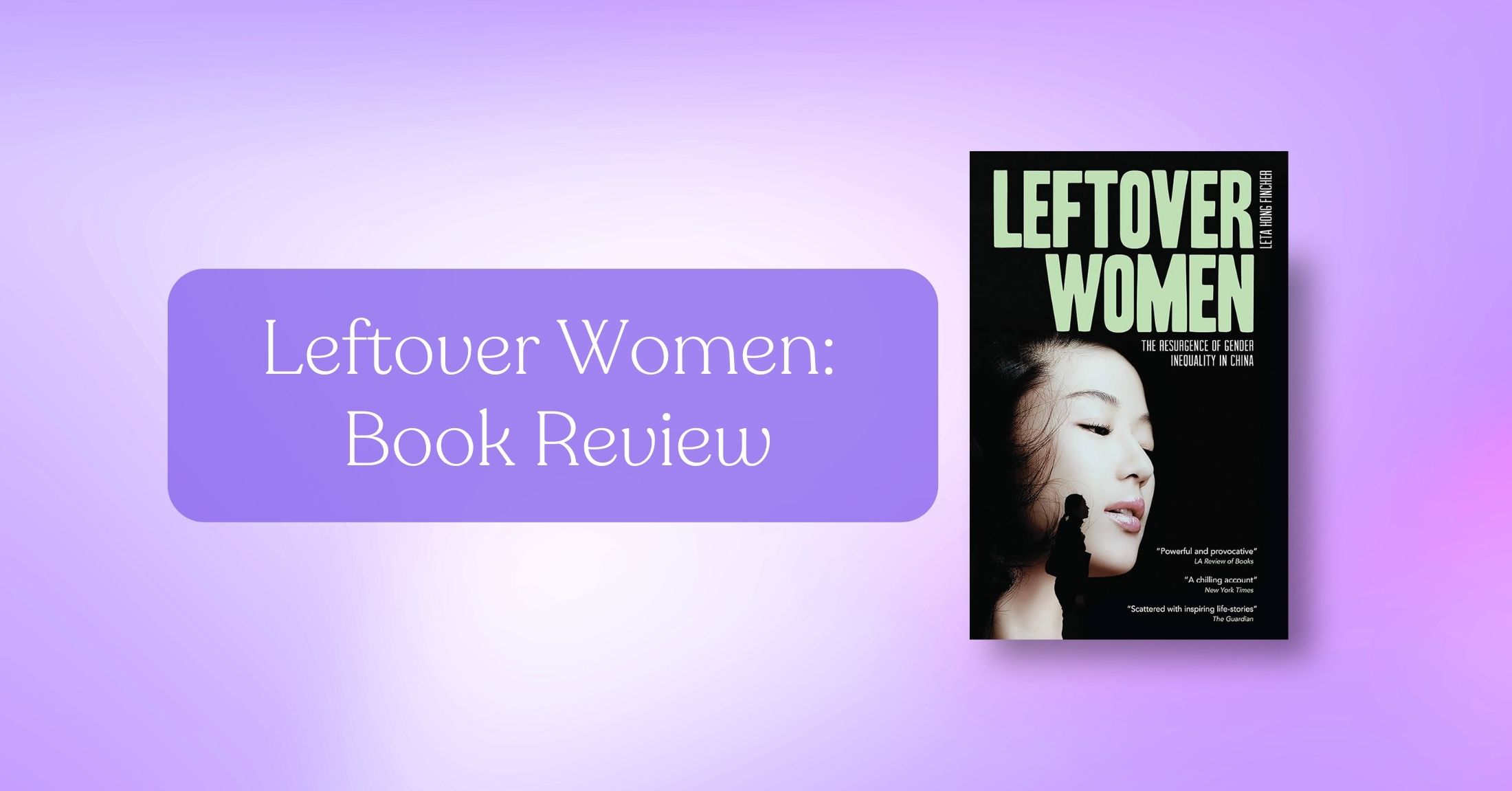

What is Leftover Women About?
In the early years of the People’s Republic of China, the Communist Party sought to transform gender relations, but those gains have been steadily eroded in recent decades during China’s transition to a post-socialist era. In fact, women in China have experienced a dramatic rollback of rights and gains relative to men. In Leftover Women, journalist Leta Hong-Fincher exposes shocking levels of structural discrimination against women and highlights the broader damage this has caused to China’s economy, politics, and development.
Drawing on cutting-edge data from a Sina Weibo survey of over three hundred men and women as well as in-depth interviews with both men and women in China over several years, Leftover Women debunks several major myths about the status of women in China’s post-socialist period. In this thoroughly expanded second edition, Hong-Fincher builds on her earlier work to examine new developments, most notably China’s growing and increasingly assertive feminist movement, and she looks ahead to consider the implications of these developments for the future of China and its ruling regime.
The first book to offer a unique, inside view of educated women in China’s emerging middle class, Leftover Women provides an insightful analysis of the realities women in China face today.

My Honest Review
 Leftover Women: The Resurgence of Gender Inequality in China by Leta Hong Fincher
My rating: 5 of 5 stars
I first read Leftover Women in 2015 while serving as a Peace Corps volunteer in Chongqing, China, after checking it out from the Peace Corps volunteer library. At the time, I was living inside the culture the book examines, which made the experience especially impactful. The concept of “leftover women,” a term used to criticize women who are still single after their 20s, is explored with devastating honesty and depth.
What stood out most to me was how clearly the book exposes the immense societal pressures placed on women: to marry early, to stay married regardless of happiness, and to carry lasting criticism if a marriage doesn’t work out. It also addresses expectations around parenthood and family life, and how unforgiving those expectations can be. Having witnessed these pressures within the Chinese culture firsthand, I found the book both validating and eye-opening.
The book also highlights important shifts happening in China today, particularly around education. Women are now earning more master’s degrees than men in China, which is reshaping gender dynamics and expectations, often in ways that create tension rather than freedom. I deeply empathized with the stories shared, especially those involving LGBTQ individuals entering “lavender marriages,” unable to live openly or fully as themselves due to cultural constraints.
Overall, Leftover Women is reflective, sobering, and deeply human. It powerfully argues for gender equality and for allowing people to live authentically, free from rigid societal pressure. I highly recommend it to anyone seeking a deeper understanding of Chinese culture, gender roles, and the cost of enforced conformity.