
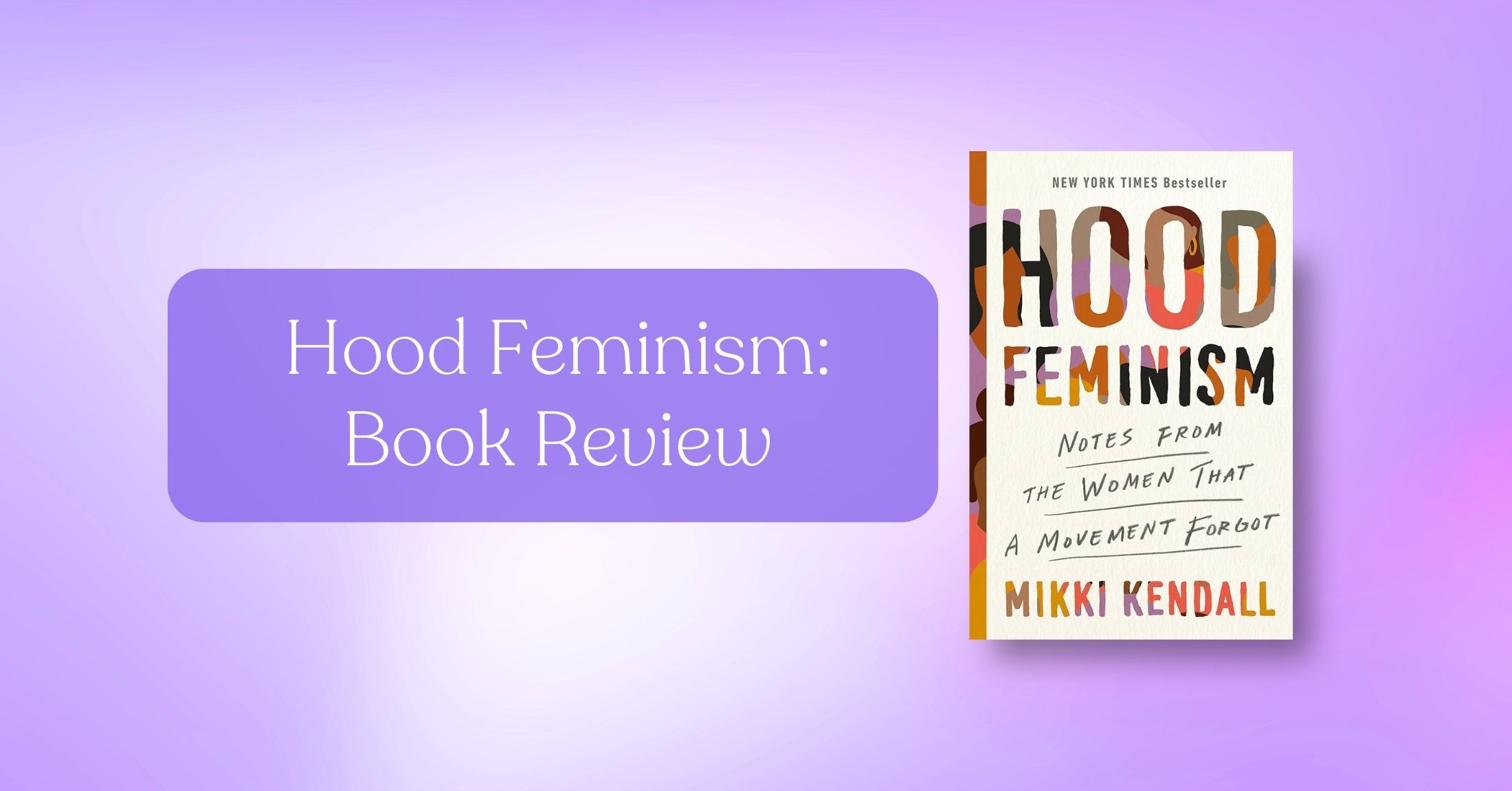

What is Hood Feminism About?
Today’s feminist movement has a glaring blind spot, and paradoxically, it is women.
Mainstream feminists rarely talk about meeting basic needs as a feminist issue, argues Mikki Kendall, but food insecurity, access to quality education, safe neighborhoods, a living wage, and medical care are all feminist issues.
All too often, however, the focus is not on basic survival for the many, but on increasing privilege for the few. That feminists refuse to prioritize these issues has only exacerbated the age-old problem of both internecine discord and women who rebuff at carrying the title. Moreover, prominent white feminists broadly suffer from their own myopia with regard to how things like race, class, sexual orientation, and ability intersect with gender.
How can we stand in solidarity as a movement, Kendall asks, when there is the distinct likelihood that some women are oppressing others?

My Honest Review
 Hood Feminism: Notes from the Women That a Movement Forgot by Mikki Kendall
My rating: 5 of 5 stars
I just completed the audiobook version of “Hood Feminism,” and I have to say that if you are a person who cares about others—specifically people of color, queer people, and women—this is absolutely essential reading.
Throughout the book, I found myself shaking my head in disbelief because, yeah, the injustices we’re facing as a society are not only ridiculous but profoundly troubling. Witnessing such systemic failures is more than difficult. It’s deeply frustrating and leaves you feeling helpless. But ultimately, Kendall’s work is a powerful call for people to become allies and accomplices in the pursuit of justice, to help others live the lives they deserve with dignity and liberty. It’s astounding that we, as a society, still have to have these conversations, that we have to dedicate so much energy to advocating for what should be recognized as basic human rights. What becomes increasingly clear throughout this work is that white people in society remain a primary root cause of immense suffering for people of color, queer people, and women in particular.
I really appreciated the depth with which Kendall explores the struggles that people of color and queer people face daily. Her unwavering advocacy for speaking out about these realities is both necessary and inspiring, though I can’t help but recognize that people of color must be utterly exhausted from constantly having to educate, explain, and fight for their humanity. This book reinforced my commitment to doing better as a white person and reinforced my understanding that white people need to work considerably harder to advocate for everyone and to actively dismantle the systems that perpetuate the suffering of people of color, queer people, and women.
To me, “Hood Feminism” is a major call for white people in particular to genuinely embrace feminism and recognize that true feminism intersects with every aspect of what makes our lives meaningful. We can and should be doing better. We are not doing nearly enough. We have the capacity to do much, much better at ensuring that everyone in this country, in the world, has equal access to opportunity and happiness.
This is an exceptional book, necessary and required reading for anyone who genuinely cares. My struggle is figuring out how to reach people who remain blind to the issues happening right in front of them, how to get people to care enough to engage with this vital work. But I’m committed to keep trying to amplify perspectives like Mikki’s, because these voices not only deserve to be heard. They demand our attention and action.